
Tennis strength training earns its place in a player's week on two fronts: performance and durability. A 2025 meta-analysis of 16 controlled trials found that resistance training produced a significant improvement in serve speed, and programs that combined strength work with movement and power training did better still. For the recreational and league players we work with in Cary, the durability half of that equation usually matters more, because the injuries that quietly end a season tend to land in the elbow, ankle, knee, and calf.
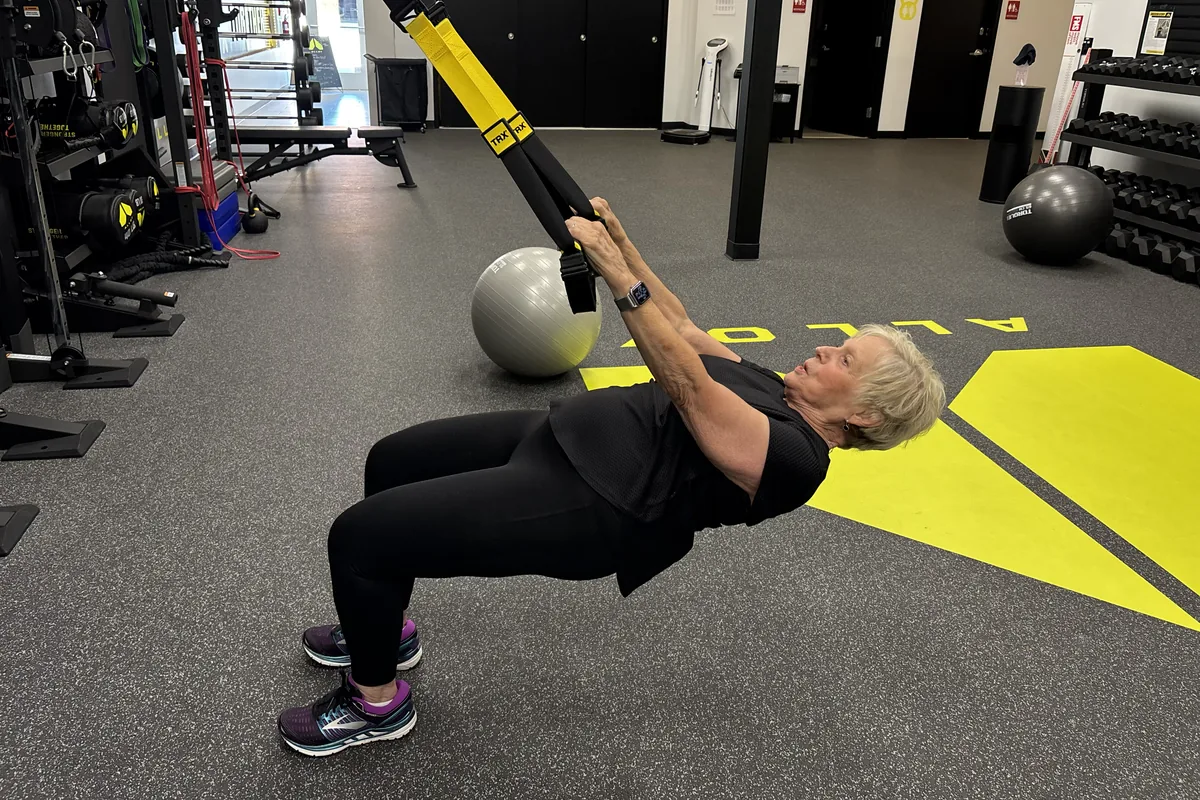
Why the Courts in Cary Feel More Competitive Now
There are simply more adults playing than there were a few years ago. US tennis participation hit a record 27.3 million players in 2025, up 1.6 million in a single year and marking the sixth straight year of growth. Adults 35 and older drove roughly 95% of that increase, and the number of core players, meaning people who play ten or more times a year, reached a record 14.5 million.
Cary sits at the center of that in the Triangle. Cary Tennis Park runs 36 courts across 24 acres, 25 of them outdoor hard courts, seven covered, and four permanent pickleball courts, with a championship stadium court, and the Town of Cary bills it as North Carolina's largest public tennis venue. It draws more than 300,000 visitors a year, was named Municipal Facility of the Year by RSI Magazine in 2025, and hosts 20-plus sanctioned tournaments annually, including the Cary Tennis Classic from June 28 to July 5, 2026. Beyond the park, Annie Jones, R.S. Dunham, and Godbold parks all carry lighted public courts, and Western Wake Tennis Association leagues keep a steady weekly match schedule running through all of it.
The practical effect is that the person across the net is more likely to be prepared than they were five years ago, and you are more likely to be playing three or four times a week instead of one. Skill still decides points. But the number of matches your body can absorb, week after week, is what decides whether you finish the season at all.
What the Research Says About Tennis Strength Training
The strongest recent evidence for tennis strength training is a January 2025 meta-analysis in Frontiers in Physiology. Pooling 16 randomized controlled trials covering 439 players, the authors found that resistance training significantly improved serve speed (effect size 0.53, p < 0.0001, drawn from 10 trials and 269 participants). Combined programs that added movement and power work produced a larger effect, 0.79.
Worth being straight about the population. Those trials studied tennis players ranging from about 11 to 42 years old, at club through elite level. Nobody has run the equivalent study on 55-year-old league players, so treat the finding as a strong direction rather than a number you should expect to see on a radar gun. What it does establish is that lifting does not blunt a tennis player, which is the fear most people bring to the conversation. Across these trials, the players who got stronger served faster.
The dosing is unspectacular and that is the point. Most of the programs in the research used about two sessions a week alongside normal play. That is a realistic amount of training to hold onto in October, in February, and during a league run, which matters more than any single program design.
The Injury Reality for Players in Their 40s, 50s and 60s
This is where the case gets pointed. In a 2025 survey published in Musculoskeletal Care, 73.3% of recreational tennis players reported at least one tennis-related injury. The sample was 172 recreational players with a mean age of 50.2, which is a close match for a Cary weeknight league roster. Muscle strain was the most common injury type at 45.6%.
| Injury site | Share of recreational players reporting it |
|---|---|
| Elbow | 34.9% |
| Ankle | 32.5% |
| Knee | 28.6% |
| Wrist or hand | 27.8% |
Then there is the one that mid-life players talk about with a particular grimace: "tennis leg," a strain of the calf complex that usually announces itself on a hard push-off or a sudden change of direction, and which shows up disproportionately in middle-aged recreational players. It is the classic acute injury of this age group, and in our experience it shows up mid-season, not week one.
Strength training is not a shield against any of that. What the trial evidence supports is a meaningful shift in the odds. In Lauersen and colleagues' analyses of injury-prevention trials, strength training was associated with acute injury rates around a third of the control rate and overuse injuries nearly halved. Those trials pooled multiple sports rather than tennis specifically, so read it as a general training effect, not a tennis result. If you are currently dealing with pain or coming back from something, that is a conversation for your doctor or physical therapist first, and we will build around whatever they tell you.
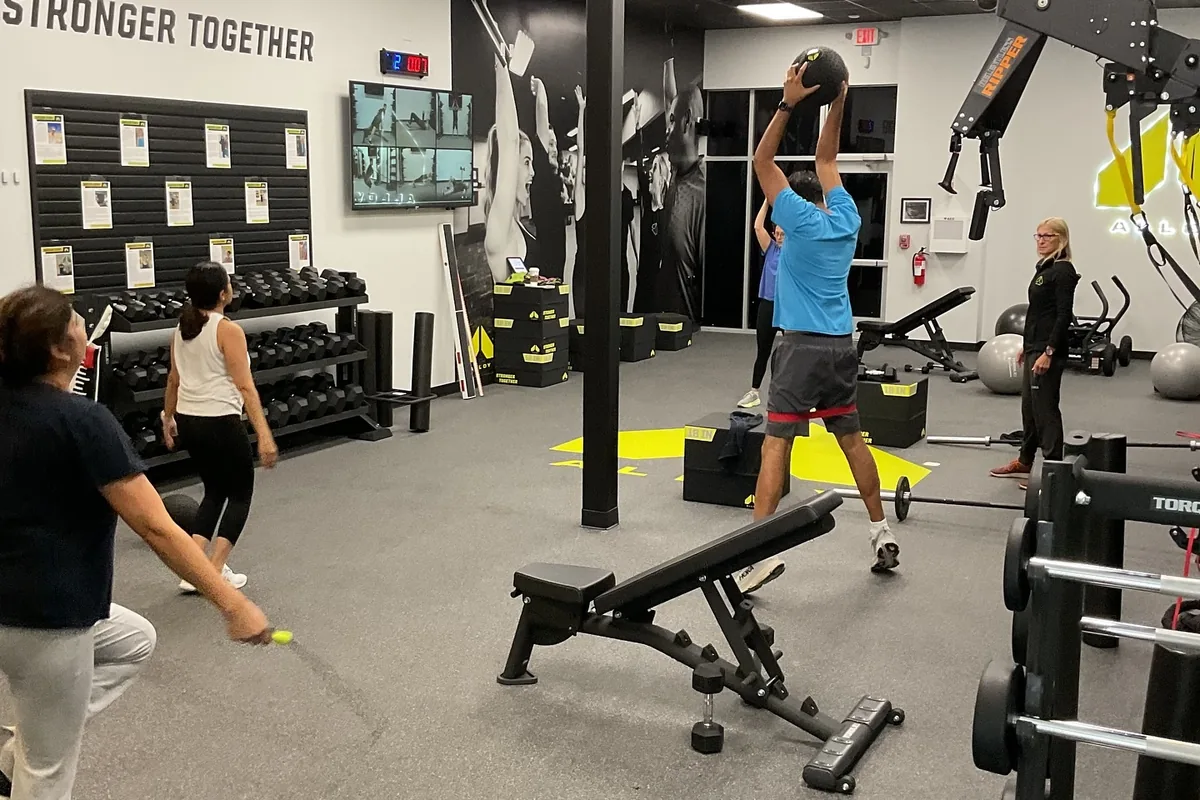
What We Actually Train for Tennis
The training targets follow the injury table and the demands of the sport rather than a generic full-body template. Four areas do most of the work:
- Hips and legs for court movement. Split-stance and single-leg work, hinge patterns, and deliberate loading of the calf and Achilles. This is the push-off, the recovery step, and the drive up through the serve, and it is the same tissue involved in the ankle, knee, and calf injuries above.
- Rotational and anti-rotational core. Tennis is a rotational sport played on one leg. We train both the ability to produce rotation and the ability to resist it, which is what keeps the low back and hips out of the transaction. Golfers get a nearly identical prescription, which is why the strength training approach we use for golfers in Cary overlaps heavily with this one.
- Shoulder and scapular control. Overhead position quality, and the stabilizing work that supports serving volume rather than just serving hard.
- Grip and forearm endurance. The elbow tops the injury table at 34.9%, and forearm capacity is the piece most recreational players have never trained at all.
None of that is a fixed program. Every workout at our studio is individualized to the member's body, goals, and injury history, so a 58-year-old with a cranky elbow and a 34-year-old chasing a faster first serve can be in the same 50-minute session and be doing genuinely different work. That is the function of personalized exercise programming inside a small group: same room, same coach, different plan.
Fitting Two Lifts a Week Around League Play
The scheduling question is the one that sinks most tennis players' training. Two sessions a week is the research-typical dose, and the practical version looks like placing your heavier lower-body work away from match days, keeping the day before a match lighter and more movement-focused, and accepting that during a tournament week the lifting becomes maintenance rather than progress.
The Triangle complicates this in a good way. With seven covered courts at Cary Tennis Park, play here runs close to year-round, so there is no true offseason to build in. That argues for a smaller, steadier weekly dose rather than a big winter block you abandon in April.
Expect some soreness in the first few weeks, particularly in the calves and the muscles around the hips. That is normal and it settles. If you want the fuller picture of what is ordinary and what deserves a second look, we wrote about muscle soreness after 40 separately. Most members notice improvements in energy and strength within the first few weeks, while body-composition change typically shows over 8 to 12 weeks, and the long-run results come from staying consistent rather than from any single hard month.
Training for Tennis in West Cary
Our studio sits at 5022 Arco St in Alston Town Center, just off NC-55 in west Cary, the same town as the courts at Cary Tennis Park, Annie Jones Park, and Godbold Park. We opened in 2025 and work with adults 30 and up across Cary, Morrisville, Apex, Durham, and Raleigh.
Sessions run 50 minutes, are coach-led start to finish, and are capped at six members, which is what makes individualized programming workable in a group setting. Membership includes a functional movement assessment, monthly InBody body-composition scans, monthly accountability sessions, and ongoing nutrition coaching. For players who want to understand how the lifting side is structured for this age group specifically, our page on strength training over 40 covers the reasoning in more depth, and the Starting Point Session is where any of it begins.
Get Your Complimentary First Session
If you play in a Western Wake league or you are on the courts at Cary Tennis Park most weeks, the fastest way to find out where your training should start is to get assessed. Book your complimentary Starting Point Session and you will get a strength and mobility assessment, an InBody body-composition scan, a goal-setting conversation about your tennis and your schedule, and a customized plan built around your history. There are no obligations attached to it. We were voted Best New Business in Cary Magazine's 2026 Maggy Awards, in a vote cast by more than 12,000 locals, and we would like the chance to show you why. Book your Starting Point Session here.